

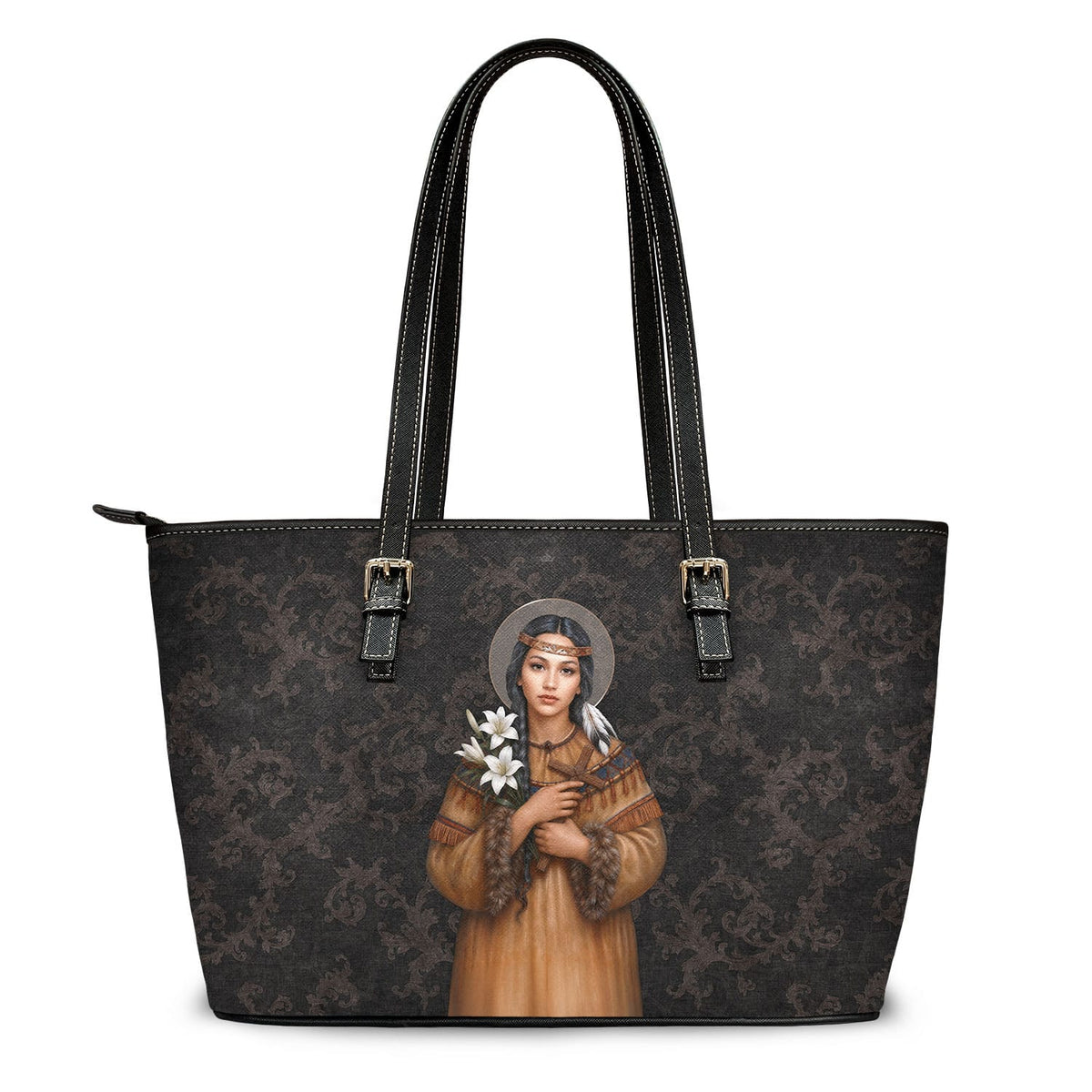



St. Kateri Tote Bag (Damask Umber)
The St. Kateri Tote Bag is an artistic expression of your devotion and a practical accessory for daily use designed to inspire curiosity and faith wherever you go. A truly unique and meaningful gift for birthdays, confirmations, holidays, or any special occasion.
Description + Details
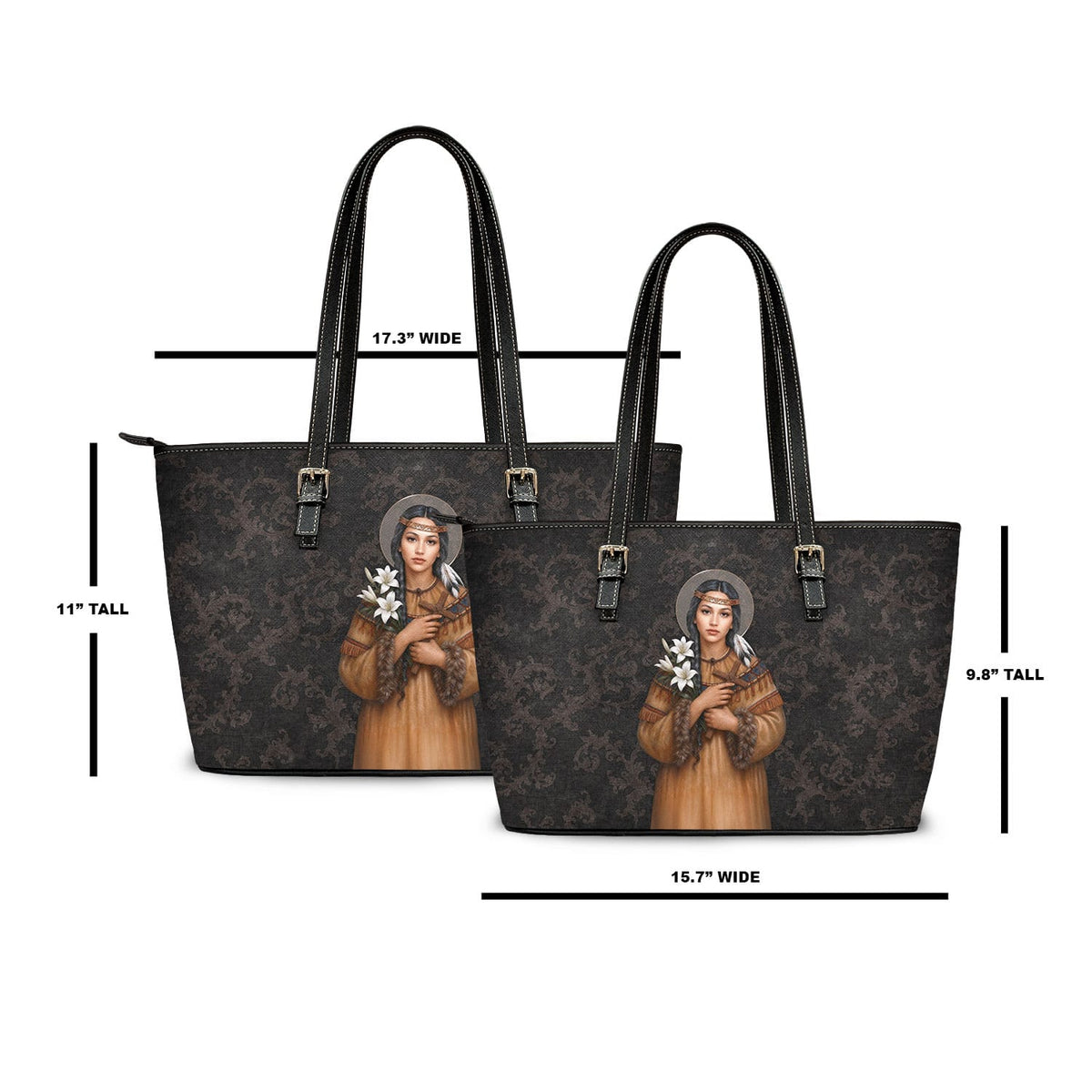
■ Medium: 9.8"T x 15.7”W x 5"D
■ Large: 11"T x 17.3"W x 6"D
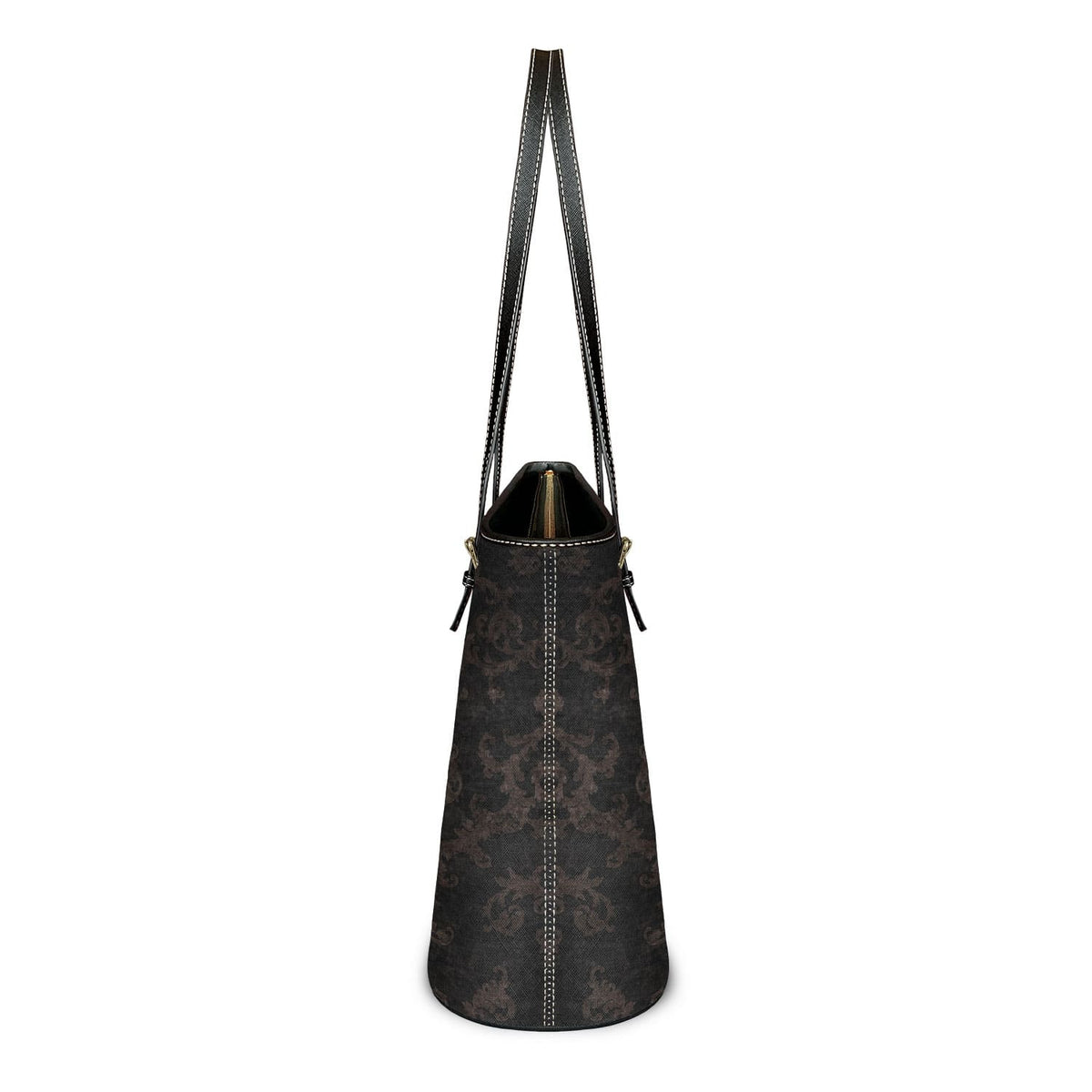
■ Adjustable 11" Straps
■ Zippered Top Closure
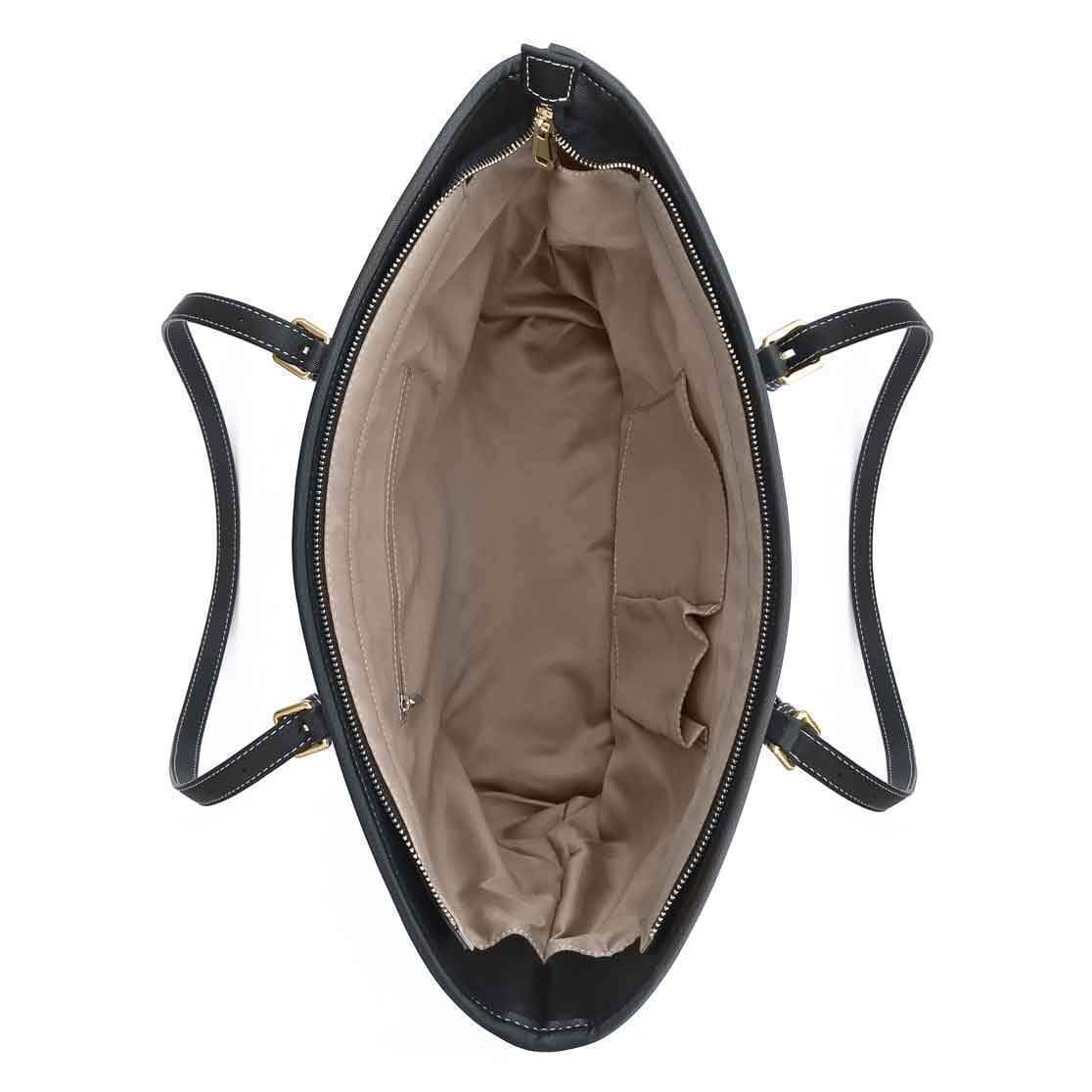
■ Interior Pockets
Made from premium-quality imitation leather with a luxurious textured finish, this durable and eco-friendly tote bag offers long-lasting beauty. The spacious interior is lined with soft brushed polyester and includes multiple interior side pockets. The adjustable straps and secure zippered closure ensure ease of use and peace of mind on the go.

This is a couture item which is custom made-on-demand. Our couture collections feature exclusive, custom designs with our signature crown somewhere within the design. Not sold in stores and you won’t find this anywhere else. EXCLUSIVELY AT VENXARA.
Production + Shipping
Made-On-Demand Production Time: 5-7 working days
Ship Time: 6-12 days
These custom made-on-demand Tote Bags ship world-wide directly from our exceptional craftsmen in Quanzhou, China. Destination tracking is available for most countries. A tracking number will be emailed to you once your order has shipped.
Please Note: During peak shopping seasons, production and ship time may take a little longer than normal. If you are buying this item as a gift, please order as early as possible. We don't want to disappoint you or the gift recipient with a potentially delayed order.
For countries where tracking numbers are not available, this item should arrive by regular post within 2-4 weeks. Orders that have not arrived within 45 days of order processing are eligible for a free reshipment or a refund.
Materials + Care
MATERIALS
These totes bag are made with a premium quality, textured imitation leather with a Saffiano Finish created by the luxury designer brand Prada. This vegan and eco friendly material is made with split leather (that’s the fibrous part of the hide left over from making genuine leather) which has been bonded with polyurethane. This material is extremely durable and the image will not fade, peel or flake. The interior lining is a soft, brushed polyester.
CARE
Your freshly made bag might arrive with a "new bag smell" (similar to a new car smell) that some people love and others do not. When you receive your bag, please unwrap it and allow the bag breathe for 24-48 hours to absorb the natural scents of its surroundings. To clean your handbag, use a soft, damp towel to wipe away any dust or dirt. You can use a mild soap or cleaning spray if needed. Please do not put this handbag in the washing machine.
About this Saint

ST. KATERI TEKAKWITHA
1656 — 1680
Feast Day July 14
Patron Saint of the environment, ecology, Indigenous peoples, orphans and people ridiculed for their piety.
Born in 1656, Kateri Tekakwitha is the first Native American to be recognized as a saint by the Catholic Church. Her mother was an Algonquin, who was captured by the Mohawks and given as a wife to the chief of the Mohawk clan, the boldest and fiercest of the Five Nations.
When Kateri was four, she lost her parents and little brother in a smallpox epidemic that left her disfigured and half blind. She was adopted by an uncle, who succeeded her father as chief. He hated the coming of the "Blackrobes" (the Jesuit missionaries) but could do nothing to them because a peace treaty with the French required their presence in villages with Christian captives. Kateri was moved by the words of three missionaries who lodged with her uncle, but fear of him kept her from seeking instruction.
Kateri was known as a skilled worker, who was diligent and patient. However, she refused to marry. When her adoptive parents proposed a suitor to her, she refused to entertain the proposal. They punished her by giving her more work to do, but she did not give in. Instead, she remained quiet and diligent.
At age 19, Kateri finally got the courage to take the step of converting to Catholicism. She was baptized with the name Kateri Catherine on Easter Sunday. Her name, Kateri, is the Mohawk form of Catherine, which she took from Saint Catherine of Siena. But now she would be treated as a slave and because she would not work on Sunday, Kateri received no food that day. Her life in grace grew rapidly. She told a missionary that she often meditated on the great dignity of being baptized. She was powerfully moved by God’s love for human beings and saw the dignity of each of her people.
She was always in danger, for her conversion and holy life created great opposition. On the advice of a priest, Kateri stole away one night and began a 200-mile walking journey to a Christian Native American village in Sault St. Louis, near Montreal.
For three years she grew in holiness under the direction of a priest and an older Iroquois woman, giving herself totally to God in long hours of prayer, in charity, and in strenuous penance. At 23, Kateri took a vow of virginity, an unprecedented act for a Native American woman whose future depended on being married.
Kateri was very devout and was known for her steadfast devotion. She was also very sickly. Her practices of self-mortification and denial likely contributed to her poor health. Sadly, just five years after her conversion, she became ill and passed away at age 24. Witnesses said that after her death, her emaciated face changed color and became like that of a healthy child. The lines of suffering, even the pockmarks, disappeared and the touch of a smile came upon her lips.
Choose options